
The Ultimate 2026 Checklist:
9 Essential Bounce House Safety Tips
A bounce house can be the star of any party, from a backyard birthday in Austin to a community festival in Round Rock. But behind the vibrant colors and joyful shrieks lies a critical responsibility: ensuring every jump is a safe one. A momentary lapse in preparation can lead to preventable injuries, turning a day of celebration into a visit to the emergency room. This isn't just a possibility; it's a documented risk.
Recent data underscores this, revealing thousands of bounce house-related injuries annually, with most stemming from inadequate supervision, improper setup, or ignoring manufacturer guidelines. The common causes are often falls, awkward landings, or collisions between jumpers of different sizes. These incidents are almost always preventable with proactive safety measures.
This guide isn't about dampening the fun. It's about empowering you, whether you're a parent, an event planner, or a community leader, with a comprehensive checklist. We are providing actionable, expert-backed bounce house safety tips designed to give you complete peace of mind. We will cover everything from pre-rental due diligence and proper anchoring techniques to on-the-ground supervision strategies and emergency preparedness.
By following these guidelines, you can confidently host an event that is memorable for all the right reasons. This listicle will equip you to manage the risks effectively, ensuring the only thing soaring is the level of fun, not the number of accidents. Let's dive into the essential steps for a secure and successful bounce house experience.
1. Proper Ground Surface Preparation and Inspection
One of the most fundamental yet frequently overlooked bounce house safety tips involves what’s underneath the inflatable. The stability, longevity, and safety of the entire setup begin with the ground it rests on. Proper ground surface preparation and inspection is a non-negotiable first step that prevents punctures, ensures stability, and minimizes the risk of falls and injuries both inside and outside the bounce house.
Before the delivery team even arrives, the designated area must be meticulously cleared and assessed. A level, grassy area is the ideal surface, as it provides a softer landing zone and allows for secure anchoring with stakes. This initial check is crucial for preventing damage to the expensive vinyl material and ensuring the inflatable doesn't lean or tip over once children start jumping, which could lead to accidents.
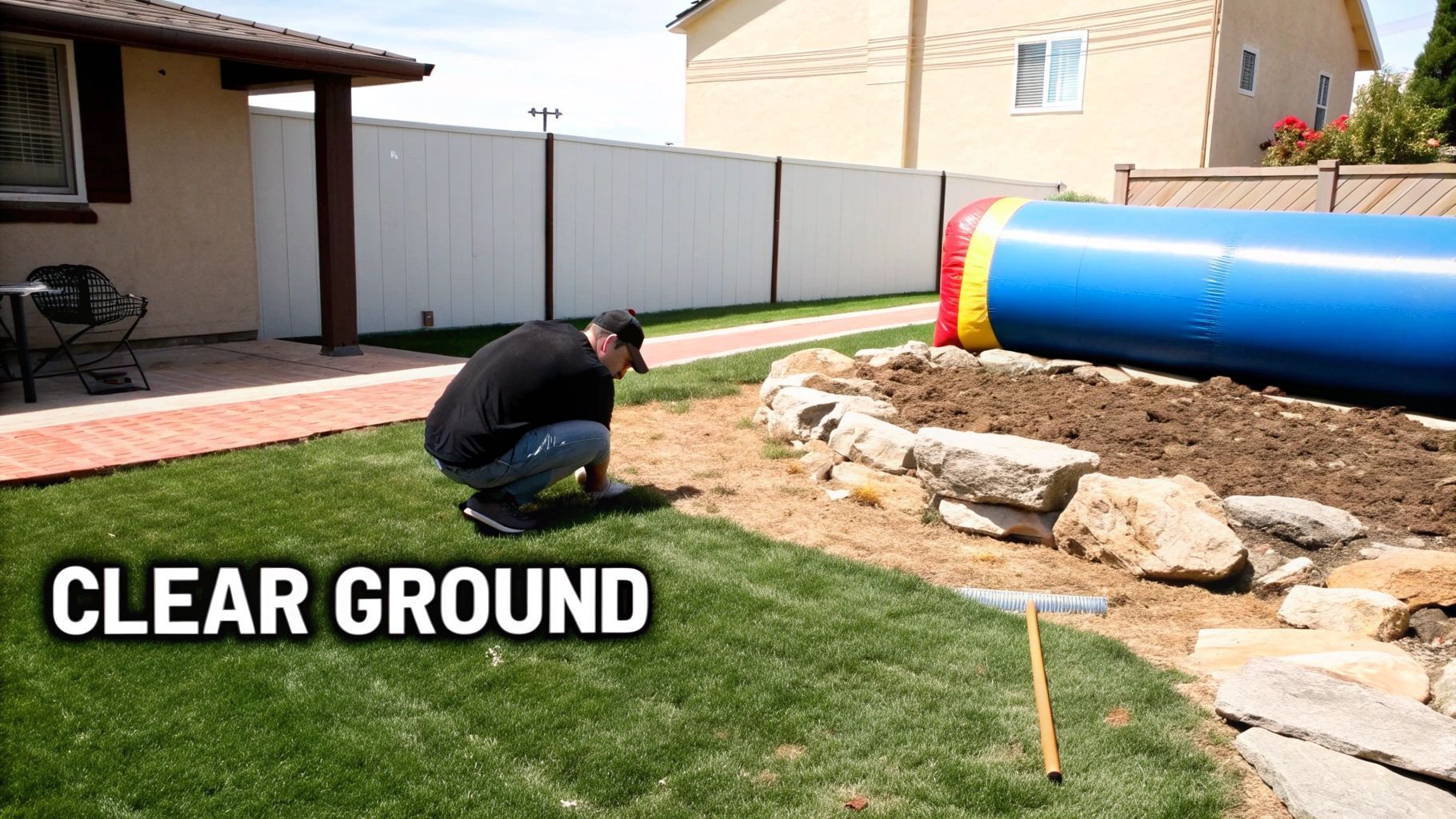
Key Actions for Site Preparation
To ensure a safe foundation, follow a systematic approach. This isn't just about picking a spot; it's about creating a controlled environment.
- Clear a Wide Perimeter: Remove all objects within a minimum 6-foot radius around the bounce house footprint. This includes toys, patio furniture, garden tools, and decorative rocks. This clear zone acts as a buffer for safe entry and exit.
- Scan for Sharp Objects: Walk the area slowly, looking for rocks, sharp sticks, sprinkler heads, and other debris that could puncture the bounce house. A small, unseen object can cause a slow leak, leading to a dangerous deflation during use.
- Confirm Level Ground: Use your eyes or a level tool to check for significant slopes. A bounce house on uneven terrain can become unstable, causing children to slide and collide on one side.
- Pro-Tip: Document the ground condition with a few quick photos before the rental company arrives. This creates a clear record of the site's initial state and confirms you’ve taken the necessary preparatory steps.
For hard surfaces like driveways or gym floors, which are common for school fairs or events at community centers, specialized ground mats or thick tarps are essential. These provide a protective layer against abrasion and add a slight cushion. Reputable companies in Central Texas, such as Jumpin Joy Party Rentals, often include heavy-duty tarps as a standard part of their setup on any surface to provide an extra layer of protection.
2. Proper Anchoring and Weather-Resistant Securing
Once the ground is prepared, the single most critical safety step is securely anchoring the bounce house. This isn't just about keeping the inflatable in place; it’s about preventing catastrophic accidents. An improperly secured bounce house can shift, tip over, or even become airborne in a sudden gust of wind, posing a severe threat to everyone present. Proper anchoring and weather-resistant securing ensure the structure remains stable and grounded, even with energetic jumping and unpredictable weather conditions.
A professional setup will always prioritize anchoring, using methods tailored to the specific surface and environmental factors. For grassy areas, heavy-duty stakes are driven deep into the ground. For hard surfaces like driveways or gym floors, large, heavy sandbags or water barrels are used to provide the necessary weight. This step is a non-negotiable part of any safe bounce house installation and one of the most important bounce house safety tips for parents and event planners to verify.
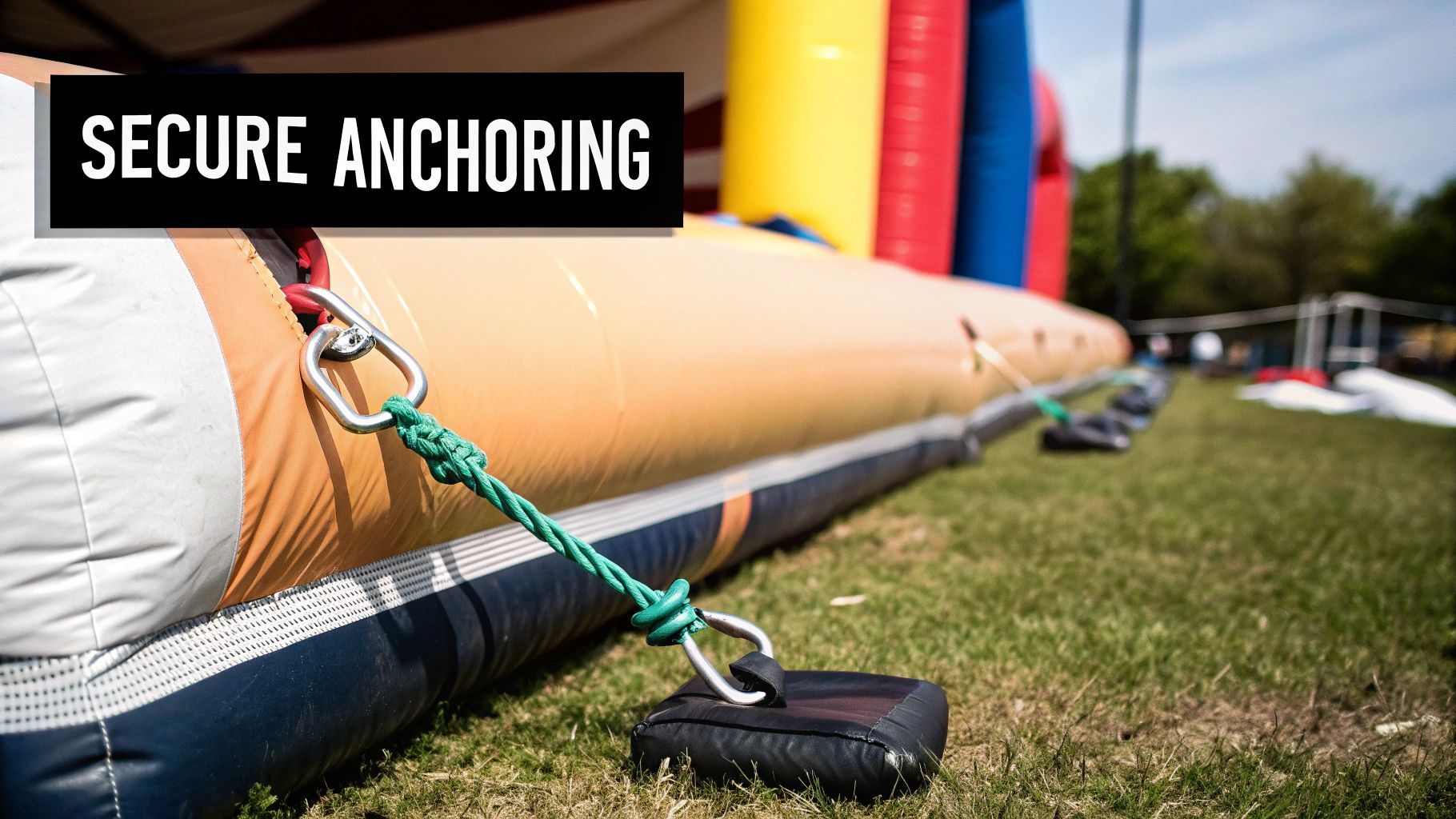
Key Actions for Secure Anchoring
Ensuring the bounce house is immobile requires a systematic and vigilant approach. It's about using the right equipment correctly and monitoring it throughout the event.
- Confirm Anchor Points: A standard residential bounce house should have a minimum of 4-6 anchor points. Larger commercial units will require more. Ensure every available anchor point on the inflatable is used.
- Use Correct Equipment for the Surface: For grass, long metal stakes should be driven fully into the ground at a slight angle away from the inflatable for maximum hold. On concrete or asphalt, use heavy sandbags (at least 40-50 lbs each) or water barrels at each point.
- Monitor Wind Speeds: Wind is the greatest threat to an inflatable. Operations must cease if sustained winds exceed 15-20 mph. Have a reliable weather app or a handheld anemometer ready to monitor conditions.
- Check Tension Regularly: Throughout the event, walk around and check that all ropes or straps are taut and the anchors have not shifted. High activity can cause them to loosen over time.
- Pro-Tip: Before the event starts, physically push on the corners of the fully inflated bounce house. It should feel solid and not shift or lift in any direction. If it moves easily, the anchoring is insufficient and needs to be reinforced immediately.
The video below provides a visual demonstration of the powerful effects wind can have on an unsecured inflatable, highlighting why this step is so critical.
3. Age and Weight Limit Enforcement
A bounce house may seem like an endless space for fun, but every inflatable is engineered with specific manufacturer limits for age and total weight. Enforcing these limits is a critical safety measure that protects the structural integrity of the unit and, more importantly, the children inside. Overloading an inflatable can strain its seams, cause it to become unstable, and dramatically increase the risk of collisions and injuries.
Strictly adhering to these capacity rules is non-negotiable for a safe event. It prevents the bounce house from becoming dangerously crowded, where smaller children can easily be overwhelmed or injured by larger, more boisterous jumpers. This proactive step is fundamental to any responsible event host's plan and is a cornerstone of professional bounce house safety tips.
Key Actions for Secure Anchoring
Managing jumpers effectively requires a clear plan and consistent communication. It's about setting expectations before the first child even steps inside.
- Post Visible Signage: Display the manufacturer's age and weight limits prominently at the entrance of the bounce house. This serves as a constant, visible reminder for parents and supervisors.
- Brief All Supervisors: Before the event begins, ensure anyone watching the bounce house understands the exact capacity limits and is empowered to enforce them.
- Manage Jumper Groups: For events with a wide range of ages, schedule separate jumping times for different age groups (e.g., a "toddler time" for children under 5). This prevents dangerous size mismatches.
- Count Occupants: Assign one person the specific job of counting children as they enter and exit, ensuring the maximum number is never exceeded.
- Pro-Tip: Use a gentle but firm approach when enforcing rules. A friendly reminder like, "We need to make some space for new friends! Let's have three people come out so three more can go in," is more effective than an abrupt command.
Reputable rental companies make this process easier by clearly communicating the limits for each of their units. For instance, the various bounce houses available in Central Texas each have distinct capacity guidelines based on their size and design. Asking for this information upfront allows you to choose an inflatable that matches your expected guest list and plan your supervision strategy accordingly.
4. Continuous Adult Supervision and Trained Monitoring
Relying on parents to watch their own children in a bustling party environment is a common but dangerous assumption. Effective bounce house safety tips always highlight the need for dedicated, continuous adult supervision. A designated and trained monitor serves as the first line of defense against accidents, enforcing rules, managing capacity, and identifying potential hazards before they escalate into injuries.
This role goes beyond casual observation; it requires an attentive adult positioned at the entrance with a clear view of the entire jumping area. Their sole responsibility is to ensure the rules are followed, preventing overcrowding, rough play, and flips that often lead to collisions and falls. For larger gatherings like school carnivals or community festivals, having a team of trained supervisors is not just a best practice, it's an essential safety protocol.
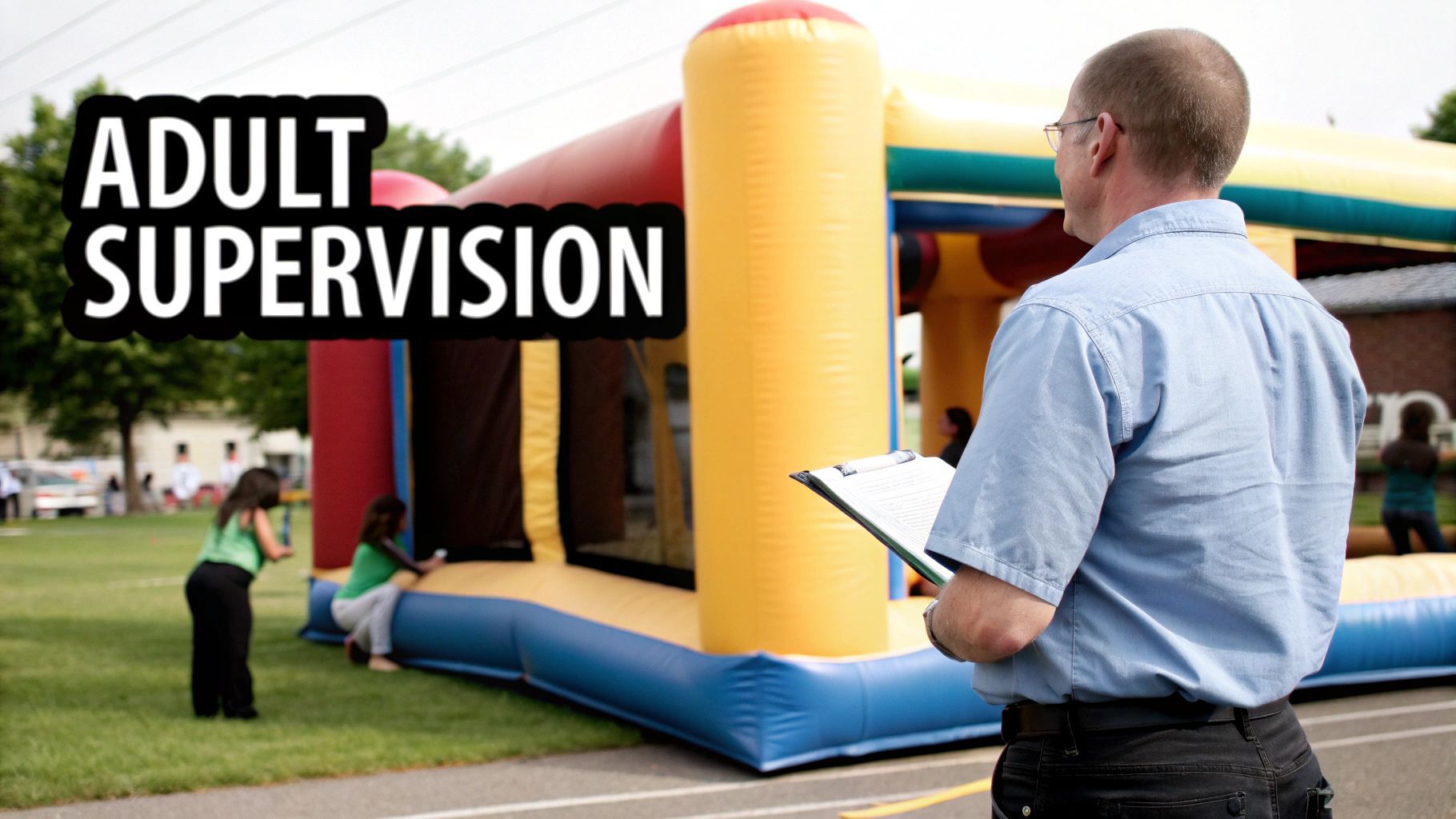
Key Actions for Effective Supervision
To implement professional-level monitoring, event organizers should establish clear protocols for their supervisors. This transforms a passive observer into an active safety manager.
- Enforce Rules Consistently: The supervisor must clearly communicate and enforce rules like "no shoes," "no sharp objects," "no flips," and "no climbing on walls." A firm but friendly approach is key.
- Manage Jumper Capacity: Adhere strictly to the manufacturer's weight and occupancy limits. Use a simple clipboard or counter to track how many children are inside at any given time.
- Group by Size: Prevent injuries by ensuring children of similar sizes and ages jump together. Never allow large kids or teenagers to jump with small toddlers.
- Rotate Supervisors: For events lasting several hours, schedule supervisors in shifts or provide 15-minute breaks every hour to prevent fatigue and maintain alertness.
- Pro-Tip: Equip your designated supervisor with a whistle to quickly get the children's attention. This is far more effective than shouting over the noise of the blower and excited kids, allowing for immediate intervention if unsafe behavior occurs.
For large-scale events, hiring professionals is the safest bet. Reputable companies can provide trained staff who understand the specific risks associated with commercial inflatables and are prepared to manage crowds effectively. This professional oversight ensures all bounce house safety tips are implemented correctly, giving event planners and parents peace of mind.
5. Proper Footwear and Clothing Requirements
One of the most direct ways to prevent accidents inside a bounce house is by enforcing a clear dress code. What participants wear can significantly impact their safety, turning a fun jump into a hazardous situation. Proper footwear and clothing requirements are a critical part of bounce house safety tips, designed to prevent entanglement, scratches, and tripping injuries caused by inappropriate attire.
Before anyone enters the inflatable, their clothing, shoes, and accessories must be checked. The goal is to eliminate anything that could snag on the vinyl, get caught on another child, or cause an injury during a fall. Simply removing shoes is a common rule, but a comprehensive approach that includes clothing and accessories provides a much higher level of protection for everyone inside.
Key Actions for Safe Attire
To create a safe jumping environment, implement a simple but firm dress code. This isn't about fashion; it's about function and preventing avoidable injuries.
- Enforce a "Socks-Only" Rule: Shoes, especially those with hard soles, heels, or buckles, must be removed before entry. They can puncture the vinyl and cause serious injury to other jumpers. Socks provide a layer of hygiene and prevent friction burns.
- Remove All Sharp Objects and Accessories: This includes jewelry (rings, necklaces, earrings), belts with sharp buckles, hair clips, and even eyeglasses if possible. Empty pockets of keys, phones, and toys.
- Check for Loose or Dangling Clothing: Avoid clothing with drawstrings, capes, or overly baggy elements that can get caught in netting or on other children, creating a choking or tripping hazard.
- Pro-Tip: Include a brief note about the dress code in your party invitations or event reminders. A simple line like, "Please have children wear comfortable clothes and bring socks for the bounce house!" sets expectations and helps parents prepare.
Many party hosts and event organizers find it helpful to have a small basket of extra, clean socks available for guests who may have forgotten. It’s a thoughtful gesture that ensures no one misses out on the fun due to a simple oversight. This proactive approach reinforces the importance of safety while maintaining a welcoming atmosphere for all attendees.
6. Regular Equipment Inspection and Maintenance Records
A key differentiator between a safe inflatable and a potential hazard is the company's commitment to upkeep. One of the most critical bounce house safety tips is to ensure the rental company performs regular equipment inspections and maintains detailed maintenance records. This behind-the-scenes work verifies the structural integrity of the bounce house, ensuring it is free from defects that could compromise safety during your event.
This process involves more than just a quick glance. A professional inspection before each rental confirms that seams are strong, the vinyl has no tears or punctures, and the inflation system is working correctly. Comprehensive maintenance records document this history, tracking every repair, cleaning cycle, and safety check. This diligence ensures the equipment you receive meets or exceeds industry safety standards, providing peace of mind for parents and event planners.
Key Actions for Vetting Maintenance Practices
To ensure you are renting a well-maintained and safe unit, ask the rental company about their inspection and documentation procedures. A reputable provider will be transparent about their safety commitment.
- Ask for Inspection Checklists: Inquire if they use a standardized checklist before each delivery. This list should cover critical safety points like seam integrity, anchor point strength, and blower functionality.
- Verify Cleaning Protocols: Confirm their sanitation process. Professional companies in Central Texas, like Jumpin Joy Party Rentals, adhere to strict cleaning and sanitizing procedures after every use to ensure a hygienic environment.
- Inquire About Repair History: While you don't need every detail, asking how they handle and document repairs can reveal their commitment to quality. A well-managed company will have a clear system for tracking and addressing equipment wear and tear.
- Pro-Tip: Before the setup crew leaves, do a quick walk-around with them. Point to the seams, mesh netting, and entrance ramp and ask if those specific areas were checked during their pre-delivery inspection. This shows you are an informed customer and encourages accountability.
Ultimately, a bounce house is a piece of heavy-duty equipment that endures significant stress. Companies that invest in rigorous, documented maintenance are prioritizing your child’s safety over simply maximizing rental turnover. This proactive approach to equipment care is a non-negotiable aspect of a safe and successful event.
7. Clear Rules Communication and In-Use Safety Guidelines
One of the most effective bounce house safety tips is proactive communication. Simply having rules is not enough; they must be clearly established, consistently communicated, and actively enforced. Establishing and explaining usage guidelines before anyone sets foot inside the inflatable is a critical measure that transforms a potentially chaotic environment into a structured, safer play zone. It significantly reduces the risk of injuries from collisions, flips, and improper use.
A clear set of rules serves as a blueprint for safe behavior, covering everything from entry procedures to prohibited activities. When children and supervisors understand the expectations, they are better equipped to prevent accidents before they happen. This proactive approach is essential for any event, from a small backyard birthday party to a large community festival in Central Texas.
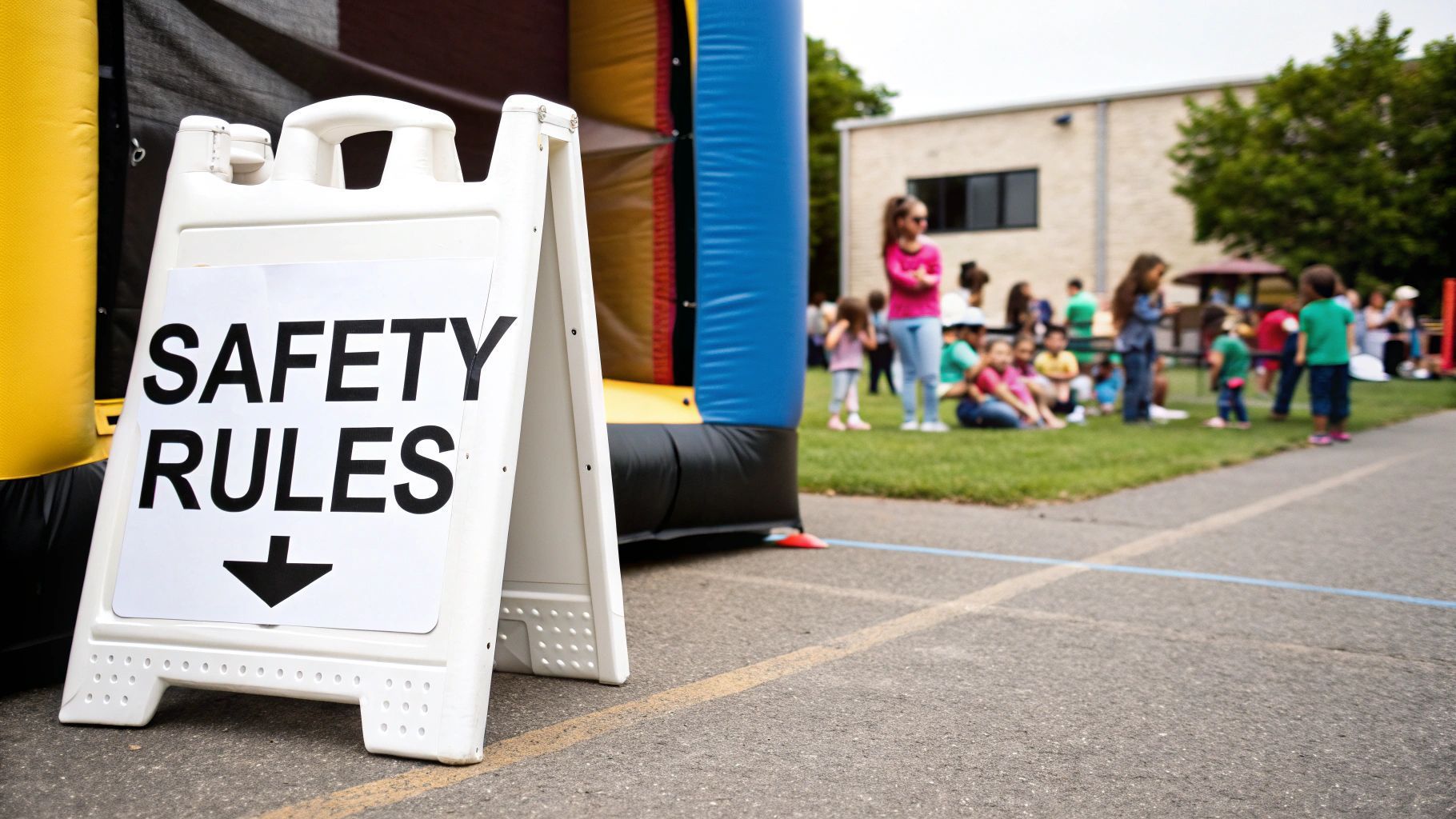
Key Actions for Rule Communication
To ensure everyone understands and follows the safety guidelines, a multi-faceted communication strategy is essential. This involves both visual and verbal reinforcement.
- Post Visible Signage:
Place a large, easy-to-read sign with the key rules at the entrance of the bounce house. Use simple language and graphics or icons so that even young children can understand the basic dos and don'ts.
- Conduct a Verbal Briefing: Before the first group enters, the designated supervisor should give a quick, friendly verbal reminder of the most important rules, such as "no flips," "keep shoes off," and "slide feet-first."
- Reinforce Rules Periodically: For longer events, have the supervisor gently remind jumpers of the rules every 30-45 minutes. This is especially important as new children join the group.
- Pro-Tip: Include the safety rules directly in your party invitations or event registration emails. This gives parents a chance to review the guidelines with their children before they even arrive, setting the stage for a safer experience.
Reputable rental companies prioritize this aspect of safety by providing clear documentation. For instance, many companies supply a comprehensive rule sheet with every rental, outlining everything from occupancy limits to prohibited items. For additional clarity on what to expect from a rental company's policies, you can find answers to common questions about safety rules and procedures. By making rule communication a standard part of the process, both the rental company and the event host contribute to a safer environment for everyone.
8. Weather Monitoring and Emergency Shutdown Procedures
Arguably one of the most critical bounce house safety tips, vigilant weather monitoring is the only way to prevent environmental conditions from turning a day of fun into a dangerous emergency. Weather can change rapidly, and conditions like high winds, rain, or lightning can destabilize an inflatable, posing severe risks. Having clear shutdown procedures is not just a suggestion; it's an essential safety protocol to protect every participant.
Ignoring weather warnings can have catastrophic consequences. Wind is the primary danger, with gusts as low as 15-20 mph capable of lifting or tipping a bounce house, even one that is properly anchored. Similarly, rain makes surfaces dangerously slick, while lightning presents a significant electrocution hazard due to the blower motor. A proactive approach to weather is the only responsible way to operate an inflatable.
Key Actions for Weather Safety
A reactive approach to weather is a failed one. Your safety plan must be established well before the first cloud appears on the horizon.
- Establish a Wind Speed Threshold: The industry standard is to deflate the bounce house when sustained winds or gusts reach 15 mph. Use a reliable weather app with real-time wind speed data to monitor conditions continuously.
- Implement a Strict Lightning Policy: At the first sign of lightning or sound of thunder, all participants must exit the inflatable immediately. The standard safety protocol is to wait at least 30 minutes after the last observed lightning flash or thunder before resuming use.
- Prepare for Rain: Rain not only makes the jumping surface slippery but can also damage the electric blower. At the first sign of rain, have everyone exit, and then turn off and unplug the blower, moving it to a sheltered location.
- Communicate and Evacuate: Ensure all supervisors and adult volunteers know the emergency shutdown signal. The evacuation process should be calm but firm to get children out of the unit and to a safe, designated shelter quickly.
- Pro-Tip: Designate one person as the official "weather watcher" for the event. This individual's sole responsibility is to check a reliable weather app (like Weather Underground) every 30 minutes and make the final call to shut down operations based on pre-set safety criteria.
Reputable companies prioritize safety above all else and will have clear weather policies outlined in their rental agreements. For events in the hot Central Texas summers, for instance, a water slide rental might be a safer alternative to a dry bounce house, though weather monitoring for wind and lightning remains just as crucial. Always discuss contingency plans and rescheduling options with your rental provider beforehand.
9. Sanitization, Cleanliness, and Health Protocols
While physical injuries are a top concern, bounce house safety tips must also address the invisible threat of germs and bacteria. A bounce house is a high-contact environment where sweat, dirt, and respiratory droplets can accumulate, creating a breeding ground for pathogens. Comprehensive sanitization, cleanliness, and health protocols are essential for preventing the spread of illnesses like the common cold, flu, and other infections among young guests.
This focus on hygiene became paramount after the COVID-19 pandemic and remains a critical standard for responsible party rentals. A professionally cleaned inflatable ensures that the fun stays healthy and gives parents peace of mind. Reputable rental companies prioritize this by using hospital-grade disinfectants and following strict cleaning schedules, making it a key factor when choosing a provider.
Key Actions for a Hygienic Environment
Ensuring a germ-free play area involves protocols before, during, and after the event. These steps are a shared responsibility between the rental company and the event host.
- Verify Company Cleaning Procedures: Ask the rental company about their sanitization process. They should be able to confirm they clean and disinfect each unit after every use with EPA-approved, child-safe solutions.
- Implement a "Socks-Only" Rule: Requiring all participants to wear socks (and remove shoes) significantly reduces the amount of dirt, debris, and outside contaminants brought into the bounce house.
- Establish a Hand Sanitizer Station: Place a bottle of hand sanitizer at the entrance and exit of the inflatable. Encourage children to use it before entering and after leaving to minimize germ transmission.
- Enforce a "No Sick Children" Policy: Clearly communicate to guests beforehand that children who are feeling unwell, have a fever, or show symptoms of a contagious illness should not participate.
- Pro-Tip: Before the first child enters, do a quick wipe-down of high-touch surfaces like the entrance ramp, safety handles, and interior pillars with a disinfectant wipe. This provides an extra layer of immediate protection.
A professional company’s commitment to cleanliness is a strong indicator of their overall dedication to safety. For instance, Central Texas providers like Jumpin Joy Party Rentals emphasize their rigorous cleaning standards, using commercial-grade sanitizers to ensure every inflatable is delivered in pristine condition. This professional approach is a non-negotiable aspect of modern bounce house safety.
| Item | 🔄 Implementation Complexity | ⚡ Resource Requirements | ⭐ Expected Safety Impact | 💡 Ideal Use Cases | 📊 Key Advantages |
|---|---|---|---|---|---|
| Proper Ground Surface Preparation and Inspection | Moderate — visual inspection & 15–30 min prep | Low — rake, tarp, camera | High — prevents punctures and trip hazards | Outdoor/backyard setups, parks | Reduces damage, improves stability, compliance |
| Proper Anchoring and Weather-Resistant Securing | High — multiple anchor points & weather checks | High — ground stakes, sandbags, straps, wind meter | Very High — prevents tipping/airborne events | Open fields, parking lots, windy sites | Ensures stability, lowers liability |
| Age and Weight Limit Enforcement | Moderate — signage + active monitoring | Low–Moderate — signs, staff, scale (optional) | High — prevents overload & structural failure | Mixed-age parties, school fairs | Protects equipment integrity, reduces injuries |
| Continuous Adult Supervision and Trained Monitoring | Moderate–High — staffing and training required | High — trained staff, first-aid kit, comms | Very High — rapid response and rule enforcement | Large events, corporate rentals, schools | Early incident detection, enforces safe behavior |
| Proper Footwear and Clothing Requirements | Low — set dress code and entrance checks | Low — signage, optional disposable socks | Moderate — reduces entanglement/trip injuries | Birthday parties, indoor venues | Low-cost prevention, easy to implement |
| Regular Equipment Inspection and Maintenance Records | High — scheduled inspections & documentation | Moderate–High — trained techs, repair supplies, digital logs | Very High — detects defects, prevents failures | Rental fleets, high-usage equipment | Extends lifespan, provides liability documentation |
| Clear Rules Communication and In-Use Safety Guidelines | Low–Moderate — prepare materials & briefings | Low — signs, rule cards, verbal briefings | High — reduces risky behaviors and incidents | All events, venues with first-time users | Sets expectations, simplifies enforcement |
| Weather Monitoring and Emergency Shutdown Procedures | Moderate — monitoring + evacuation protocols | Moderate — weather apps, anemometer, radios | High — prevents weather-related accidents | Outdoor/seasonal events, open-site rentals | Clear shutdown criteria, reduces weather risk |
| Sanitization, Cleanliness, and Health Protocols | Moderate–High — cleaning schedules & training | Moderate — EPA disinfectants, cloths, staff | Moderate–High — lowers disease transmission risk | Post-pandemic events, high-turnover rentals | Builds customer confidence, reduces outbreaks |
Making Your Next Event Both Memorable and Safe
Navigating the world of event planning, especially for children's parties or community gatherings in Central Texas, involves balancing countless details. From the guest list to the decorations, every choice contributes to the overall experience. When a bounce house is part of that plan, its success isn't just measured by the height of the jumps or the width of the smiles, but by the unwavering presence of a secure and accident-free environment. The joy of a bounce house is undeniable, but that joy is built upon a foundation of diligent preparation and proactive safety measures.
Throughout this guide, we have explored the essential pillars of bounce house safety, moving far beyond simply inflating a structure and letting kids play. We've deconstructed the process into a series of deliberate, actionable steps. From ensuring the ground beneath is free of hazards to understanding the critical physics of proper anchoring against unpredictable Texas winds, each tip serves as a vital link in a chain of protection. You now have a comprehensive checklist that empowers you to take control of the safety narrative at your event.
Key Takeaways for a Secure Celebration
True safety is not a passive hope; it's an active, ongoing process. As you reflect on the detailed advice provided, remember these core principles:
- Preparation is Paramount: Safety begins long before the first child arrives. It starts with selecting a level, clear site, confirming your rental company provides commercial-grade stakes or sandbags, and understanding the specific requirements of your chosen inflatable.
- Supervision is Non-Negotiable: A designated, trained adult supervisor is the single most effective tool for preventing injuries. Their role is not just to watch, but to actively enforce rules, manage the flow of participants, and identify potential risks before they escalate.
- Communication Creates Compliance: Clearly posting and verbally communicating the rules, from "no flips" to "socks required," sets clear expectations. When children and parents understand the why behind the rules, they are far more likely to follow them, fostering a culture of shared responsibility.
By internalizing these bounce house safety tips, you shift your role from a simple event host to a dedicated safety advocate. You are no longer just renting a piece of equipment; you are creating a controlled, secure play zone. The value in mastering these concepts is profound. It allows you to offer an exhilarating activity with confidence, freeing you and other parents to enjoy the moment without the nagging worry of a potential accident. This commitment transforms a potentially high-risk activity into a highlight of your event, ensuring that the memories created are filled with laughter, not regret.
Ultimately, the goal is to make safety so ingrained in your event's DNA that it becomes invisible, allowing the fun to take center stage. You are now equipped with the knowledge to ask rental companies the right questions, to inspect equipment with a discerning eye, and to manage the play environment like a professional. You understand that factors like a sudden gust of wind or an overcrowded inflatable aren't minor inconveniences; they are serious risks that require immediate action. This foresight is what separates a good event from a truly great and safe one. Embrace this responsibility, use this guide as your roadmap, and let your next celebration be a testament to the fact that the most memorable fun is always the safest fun.
Ready to put these safety principles into practice with a trusted partner? The team at Jumpin Joy Party Rentals makes safety their top priority, providing meticulously maintained, commercial-grade inflatables and expert guidance for events across Central Texas. Plan your next fun and secure event by visiting them at Jumpin Joy Party Rentals to see their commitment to safety firsthand.